
When I lived in Australia for a few months in 2007, it was the first time I had ever experienced driving on the left side of the road. It took some getting used to. I never drove a car while I was over there, but that doesn’t mean it wasn’t an adjustment for someone accustomed to driving on the right side of the road.
Crossing the street meant, and means (present tense still applies because they still do it weirdly), that you look right first and then left. It also means that you have to prepare yourself to be on the correct side of the street while waiting for the bus, or else your bus will pass by you and you will be left standing on the wrong side of the street. Who can honestly say if that happened or not?
I feel like I adjusted well during my time Down Under. Even now, 18 years later, I still find myself occasionally looking to my right first before crossing a street. I sometimes justify it as “Well, the car that I need to really be aware of is the one on the far side of the street because that’s the one that can’t fully see me/that’s the one that could hit me. I can dodge the first one/they are aware of me, but the second car is the dangerous one!” Does it make any sense whatsoever? Not at all. However, not much in my mind makes sense.
After my first left-side driving experience in New Zealand in 2023, I was a bit more confident in my ability this time around. I got pretty comfortable driving and navigating. I was told that the UK was a completely different animal. Yes, the roads wind and rise like they do in New Zealand, but they also become so narrow that barely one and a half cars can fit down the road. It’s almost as if the streets were built before there were cars on the road! Gasp!
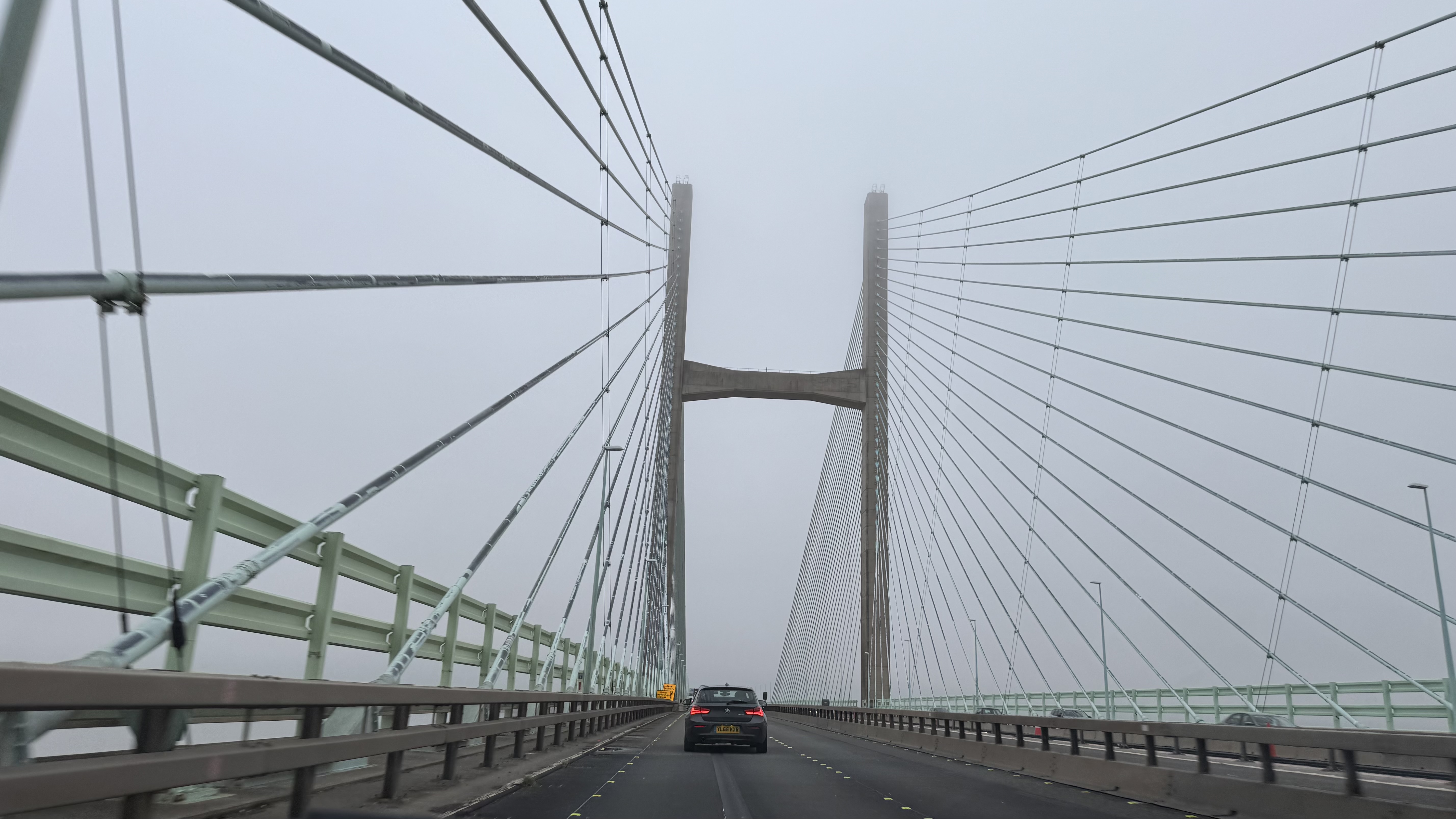
After the occasional bridge and overpass, also known as major motorways, the roads transform into something else. I hesitate to say that the streets ramble on and go all willy-nilly to take you where you need to go because at the time of their creation, I bet that those were the only safe options to take. There was no straight line option to get to someone’s home. The path had to wind around water or someone’s farmland. Needless to say, I was a bit out of my depth the first time around when I came to a spot in the road where it narrowed so much that I had to crank the wheel to one side so that the other car could pass, since they had the right of way. After I saw it in practice, I began to get the hang of the rules of the British road.
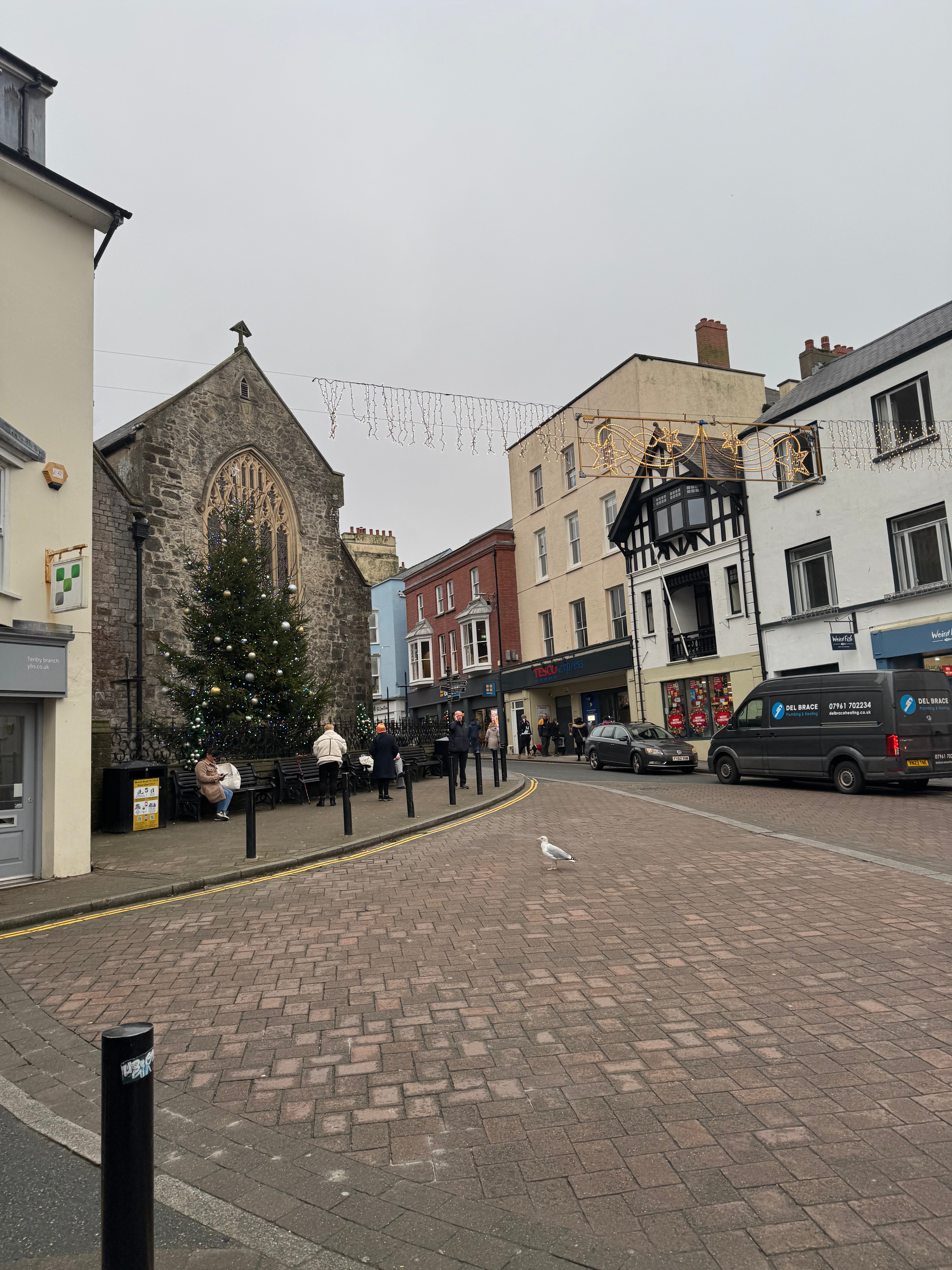
Now, not every single road was super narrow. Some, like the one pictured above, were decently proportioned to allow two cars to drive on the road, albeit very closely. The road pictured below is a different story. Aside from the weirdly named shop, FATFACE, you can see that the street is extremely narrow. Barely one car can fit down the lane. You can even see one parked in the distance to give you some perspective.
And yet, cars are still allowed there. I thought we were not allowed to drive there, given the volume of pedestrians in the street, but that was not the case. The cars drove very slowly and turned at the speed of a glacier.

I was pretty nervous driving on such narrow roads. I won’t lie. I was overly conscious of the people walking about, of the other cars on the road, and of the dogs.
The part that really tested me was when we drove on backroads. I am referring to the streets with no posted speed limit, or whether they were even real roads. JK, they were real roads. Our Welsh hosts said, or one of them said, that he drives close to 90 on some of those roads. His wife disagreed with him and shot him down. I believe he was exaggerating because the way some of those roads are, there is no safe way to drive that fast.
Here in the States, we have a few narrow roads and pinch points. Most of the time, they are bridges or private roads. There, you would give the right of way to whoever arrived at that point in the road first, and then you would follow. It’s simple. Try doing that when you’re reasonably sure the speed limit is 40 and there are 10-foot-tall hedges lining the road on either side, creating a maze-like experience. Then, you approach a narrow turn or lane and see another car. BRAKE! You wave the other auto on through, and they wave back because you did the polite and correct thing.
It’s a good feeling. Getting that acknowledgment wave. It boosts your driving serotonin, if that’s even a thing, and makes you crave that feeling. Basically, doing good does good.
After being a tad overly cautious at the start, I started to get my left-side driving legs and began to feel comfortable. It truly is an odd sensation with the steering wheel on the other side of the car. You get so used to driving a certain way for decades, and then, wham, here you are in another country driving differently, yet it is still the same. I know, it’s a bit “Is this guy high right now?” with his platitudes he’s spouting now, but it was only a brief moment! It was a fleeting shower thought.
There is something to be said about the difference in turning and changing lanes on the left side of the road. As a right-side driver, I am so used to and conditioned to having a car drive by me on my left side. It was a jarring sensation having them go by me on my right, next to my passenger. Anyway, I think I’ve written enough about driving in the UK for a total lifetime.
I will end this journey with a follow-up from my last post. It turns out I hadn’t told my now fiancée that I had thought about asking her to marry me while we were in St. Agnes. She texted me “wtf john” and “I wanted you to propose to me there!” Alas, I proposed at another place and time. More on that, much later.



 John Kidde Writes